Get fresh Indian groceries delivered right to your doorstep
We deliver fresh Indian groceries straight to your doorstep
Soon stocks will run out
Dont miss this opportunity while supplies last.

Vaseline 100% Pure Petroleum Jelly Original Vaseline 1.75 oz
available only:
39Angel Soft Toilet Paper, 9 Mega Rolls
available only:
32California Pizza Kitchen Margherita, Crispy Thin Crust Pizza, 15.5 oz (Frozen)
available only:
20Philadelphia Original Cream Cheese Spread – 12oz
available only:
52Cantaloupe Melon Fresh Organic Cut
available only:
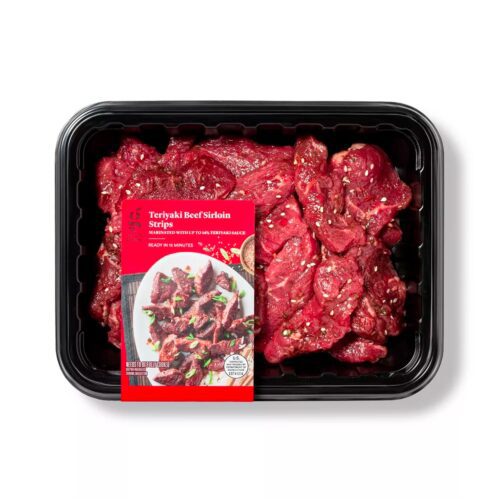
16Teriyaki Beef Sirloin Strips – price per lb
available only:
41Soon stocks will run out
Dont miss this opportunity while supplies last.

The Cost and Expected-Value Math Behind Election Prediction Markets
In an election market, a contract priced at 62 cents implies a 62% chance of that outcome, and your expected value is positive only when your own probability estimate beats the price after fees. The cost stack is small but real: a trading or settlement fee, the bid-ask spread, and the opportunity cost of locked capital. Get the math wrong and a “good bet” quietly turns negative. Here’s how the numbers actually work. This is adult-only, and no result is guaranteed.
How price maps to implied probability
Most election contracts settle at $1 if the event happens and $0 if it doesn’t. So a price reads directly as a percentage: 30 cents means the market thinks there’s roughly a 30% chance. Your edge exists only if your estimate differs meaningfully from that number. If you think the true chance is 40% and you can buy at 30 cents, the gap is your theoretical edge before costs.
The expected-value formula in plain terms
Expected value per contract is (your probability x $1) minus the price you paid, then minus fees. Buy at 30 cents with a 40% true estimate and your gross EV is 10 cents a contract. That looks healthy until you subtract trading costs and account for the fact that your 40% estimate might be wrong. EV is only as good as the probability you plug in, and most people overrate their own read.
Where the fees actually sit
Costs in these venues usually land in a few places: a percentage fee on trades or on winnings, the spread between buy and sell quotes, and sometimes withdrawal charges. Individually they’re often just a few percent. Stacked together and repeated across many trades, they can swallow a thin edge. For a fuller breakdown of how prediction markets price contracts and apply fees, that resource is worth reading before you size a position.
The spread is a hidden tax
On thin election markets, the gap between what buyers offer and sellers ask can be wide. If you buy at the ask and later sell at the bid, you’ve paid the spread twice. I’ve watched contracts where the round-trip spread alone erased most of a supposed edge. Patient limit orders help, but only if someone takes the other side.
Worked example: a close race
Say a candidate trades at 55 cents and you estimate 58%. Gross EV is 3 cents a contract, a slim 5% over your stake. Add a 2% trading fee and a 1-cent effective spread, and your real edge shrinks toward breakeven. The lesson is blunt: small estimated edges rarely survive costs, so the math only favors patient positions where your read is clearly different from the crowd’s.
Capital lock-up and timing cost
Money tied up in a contract until election night earns nothing elsewhere. If a position resolves in eight months, that’s eight months your capital can’t compound. For long-dated election contracts, factor this opportunity cost into EV. A 6% expected return over most of a year is not as exciting once you compare it to alternatives and account for the chance of a total loss.
Why most retail edges are illusory
The uncomfortable truth is that public election prices already absorb polls, news, and crowd sentiment. Beating that consensus consistently is hard. When I logged my own “obvious” calls against settled prices, the market was right more often than I expected. Treat any claimed edge skeptically, and size positions as if you might be the one mispricing the odds.
Frequently asked questions
How do I calculate expected value on an election contract?
Multiply your estimated probability by the $1 payout, subtract the contract price, then subtract fees and spread. A positive result suggests theoretical edge, but it depends entirely on your probability estimate being accurate, which is the hardest part to get right.
Are the fees high enough to matter?
Individually they’re modest, often a few percent. The problem is accumulation: spreads, trading fees, and capital lock-up combine. On thin edges, those costs frequently turn a positive-looking trade into a negative one over many positions.
Does the contract price equal the real probability?
It reflects the market’s collective estimate, which is often well-calibrated but not infallible. Treat the price as an informed consensus you must beat, not a guaranteed truth. Your edge exists only where your reasoning genuinely diverges from it.
Is buying long-shot contracts good value?
Sometimes, but long shots carry wide spreads and high variance. A 10-cent contract can feel cheap, yet most expire worthless. The EV math still applies, and the high failure rate means you need strong conviction and small position sizes.
Can I lose more than I put in?
On standard binary contracts, your maximum loss is the price you paid per contract, so you can’t lose more than your stake on that position. Still, repeated losses across many trades add up, and outcomes are never guaranteed.
What to do next
Before placing anything, write down your probability estimate, the current price, and every fee you can identify, then compute EV honestly. If the edge survives costs and you still believe your number, take a small position and track whether your estimates were calibrated. Keep stakes limited while you learn, treat early trades as data collection, and remember that a positive EV on paper is only a hypothesis until the results confirm it.
By Dana Reyes, prediction-market analyst focused on pricing and expected-value modeling. Last updated June 2026.
Recent Posts
- Discovering Mohegan Sunlight Online Casino in : A Comprehensive Guide
- Login do Bison Online Casino: Przegląd dla Polskich Athletes
- The Thrill and Approach of Gambling Establishment Blackjack Online
- Jak dokładnie zarejestrować się w Bison Casino: Przewodnik dla Polskich Graczy
- Coronavirus disease 2019